Congress Moving to Give the President Control of US Copyright Office. Music Industry Take Notice!

H.R. 6028 would make the Register of Copyrights a presidential appointee, reshaping the US Copyright Office during a pivotal AI era.

June 4, 2026

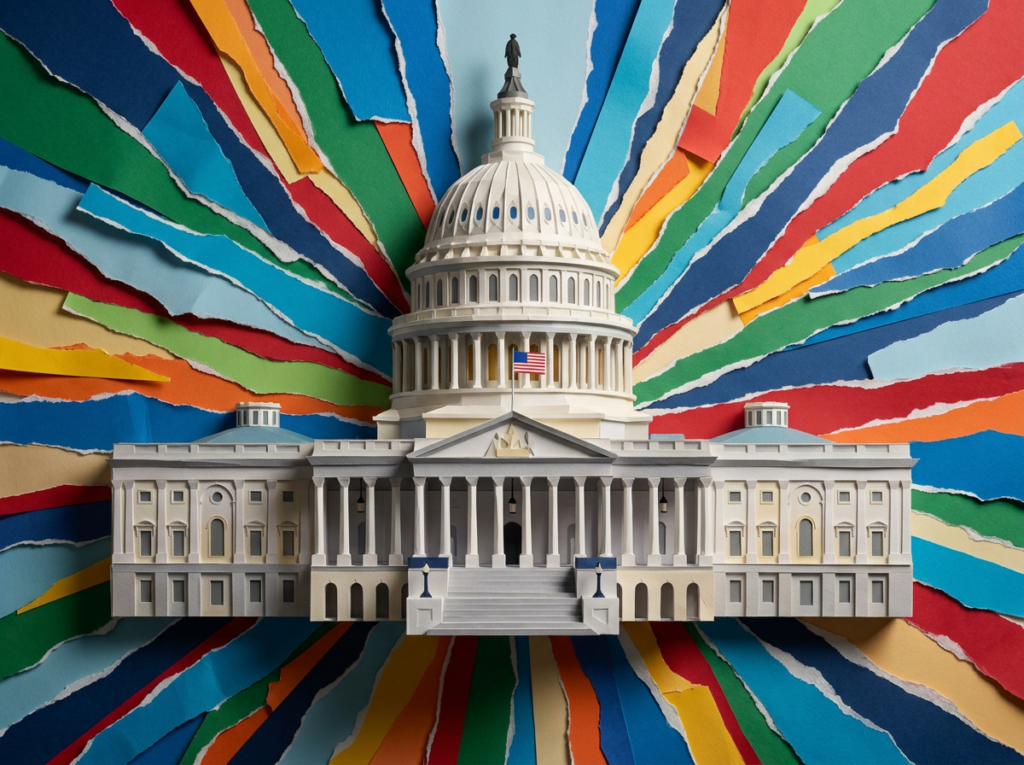
A bill moving through the House of Representatives would fundamentally restructure who controls the US Copyright Office, and the music industry has largely not noticed. H.R. 6028, the Legislative Branch Agencies Clarification Act, introduced in November 2025 by Representative H. Morgan Griffith (R-VA), would sever the Copyright Office from the Library of Congress, which has housed and supervised it since the 19th century, and make the Register of Copyrights a presidential nominee subject to Senate confirmation, serving a 10-year term with the option of reappointment. The bill cleared the House Administration Committee on May 14 and is reportedly on a path to fast-track passage through the suspension calendar. Music attorney Kevin Casini, a Quinnipiac University law professor who advises rightsholders and trade groups, flagged the legislation in a LinkedIn post earlier this month, warning that “the quiet restructuring of copyright governance is happening in plain sight.”

To understand why the bill matters, it helps to understand what the Copyright Office actually does and why its leadership is already in dispute. In May 2025, the Trump administration fired Register of Copyrights Shira Perlmutter, one day after her office released a report concluding that training AI on copyrighted works qualifies as fair use in some circumstances but not others. The firing followed the removal of Librarian of Congress Carla D. Hayden, with Deputy Attorney General Todd Blanche installed as acting Librarian before moving to replace Perlmutter with a Department of Justice official. Perlmutter sued, arguing that only the Librarian of Congress, not the President, has the power to appoint or remove the Register. A federal appeals court reinstated her in September 2025, and she remains in the role while the legal battle continues. The Supreme Court deferred action on the case in December 2025 pending related disputes over presidential removal power, and the case remains unresolved. H.R. 6028 would settle the underlying constitutional question by statute, recasting the Register as a presidential appointee and effectively mooting the Perlmutter litigation. Ticketmaster

The structural changes in the bill are specific and far-reaching. Under current law, the Register answers to the Librarian of Congress, a legislative branch official. H.R. 6028 removes that supervisory relationship entirely. The Register would instead be nominated by the President after the chairs and ranking members of the House and Senate Judiciary Committees jointly recommend three candidates, and confirmed by the Senate for a fixed 10-year term. The bill moves in the opposite direction for the Librarian of Congress and the Government Publishing Office director, both of which are currently presidential appointments. Under H.R. 6028, those positions would be selected by a bipartisan congressional commission and could only be removed by a majority vote of House and Senate leadership. Griffith framed the restructuring as a matter of constitutional logic: because the Copyright Office “performs executive-like functions” such as administering registrations and issuing regulations, he argued the Register should be an executive branch appointee, while the Librarian, whose role is more purely legislative, should move to congressional control.

Related Stories

It seems we can’t find what you’re looking for.

For the music industry, the stakes of who controls the Copyright Office are not abstract. The Office’s influence is exercised through registration decisions, policy reports, rulemakings, and guidance documents that shape how copyright law is applied in practice, including in precisely the areas where the industry is most exposed right now. On Friday (May 29), for example, Perlmutter signed a rule continuing the designation of The Mechanical Licensing Collective as the administrator of the US blanket mechanical license, which covers nearly $4 billion in royalties distributed to songwriters and publishers since 2021. The Office also weighed in on whether AI companies can train on copyrighted works without a license, the very question at the center of the Suno and Udio litigation, and that report’s conclusions directly preceded Perlmutter’s firing. As Casini noted: “A lot of what matters in copyright never shows up in headline statutes. It shows up in how the Office interprets edge cases, handles registration standards, and thinks about authorship when the fact patterns are non-standard.”

That interpretive discretion carries more weight now than at almost any previous point in the Office’s history. The UMG AI copyright enforcement patent filings, the Dua Lipa Samsung lawsuit, Taylor Swift’s trademark filings for her voice and likeness, and the labels’ effort to block AI platforms from accessing the Suno-Warner settlement terms all reflect an industry navigating a legal landscape where the rules around generative AI and copyright are still being written, often in real time. Who leads the office that helps write those rules, and whom that leader answers to politically, is a question with concrete commercial consequences for every rights holder in the United States.

Not everyone wants the bill to move quickly. A coalition including the Re:Create Coalition, the Library Copyright Alliance, and the Center for Democracy and Technology has urged Congress not to fast-track H.R. 6028, arguing that separating the Copyright Office from the Library of Congress warrants full hearings and that the move risks “serious unintended consequences” for technological innovation and free speech. Re:Create Executive Director Brandon Butler stated directly: “We urge Congress to halt the rushed passage of H.R. 6028, which risks serious unintended consequences by separating the U.S. Copyright Office from the Library of Congress. This bill must proceed through regular order with careful deliberation and input from all impacted communities, not through a fast track process.” The bill’s critics argue that a presidential appointee would politicize copyright and AI policy and could disrupt the registration and deposit systems the Library of Congress depends on. The bill has cleared committee but has not yet received a full House vote. Whether it gets one, and how quickly, will determine whether the legal fight over Perlmutter’s firing becomes moot before the Supreme Court resolves it.

Related Stories

It seems we can’t find what you’re looking for.

Related Stories

It seems we can’t find what you’re looking for.

Related Stories

It seems we can’t find what you’re looking for.

Related Stories

It seems we can’t find what you’re looking for.

FTM Newsletter

Sign Up for the Weekly Flare Newsletter so they news comes to you!

Trending

Weekly flare

A weekly briefing on what matters in the music industry

By providing your information, you agree to our Terms of Service and our Privacy Policy. We use vendors that may also process your information to help provide our services

You Might Also Like

Get the Today in Entertainment Newsletter

A weekly brief about what matters and what's interesting in Music

By providing your information, you agree to our Terms of Service and our Privacy Policy. We use vendors that may also process your information to help provide our services.