Yale Law Scholars Back UMG in Drake’s “Not Like Us” Defamation Appeal

Yale Law scholars and social scientists back UMG in Drake’s “Not Like Us” defamation appeal, arguing consent and rap norms protect the label.

April 6, 2026
Drake

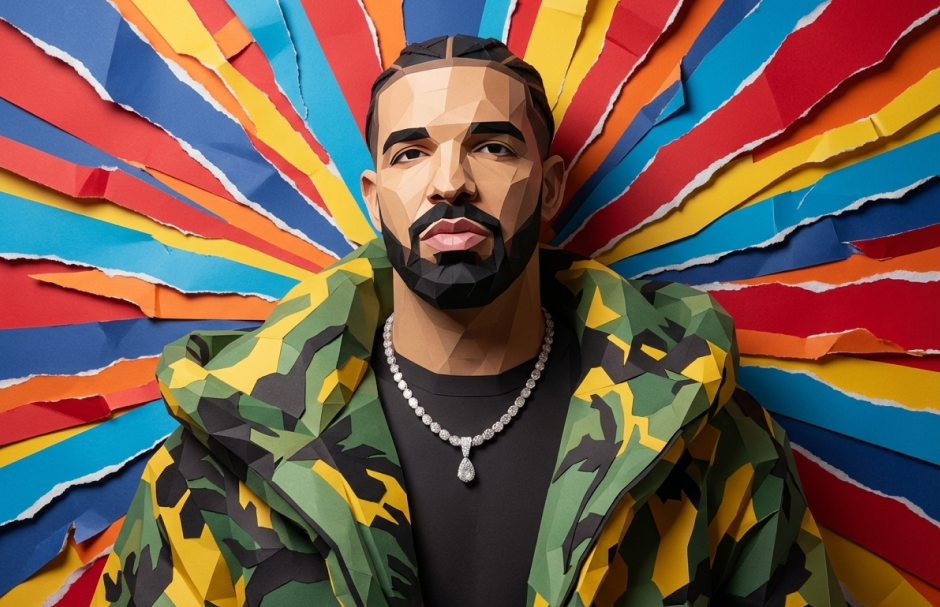
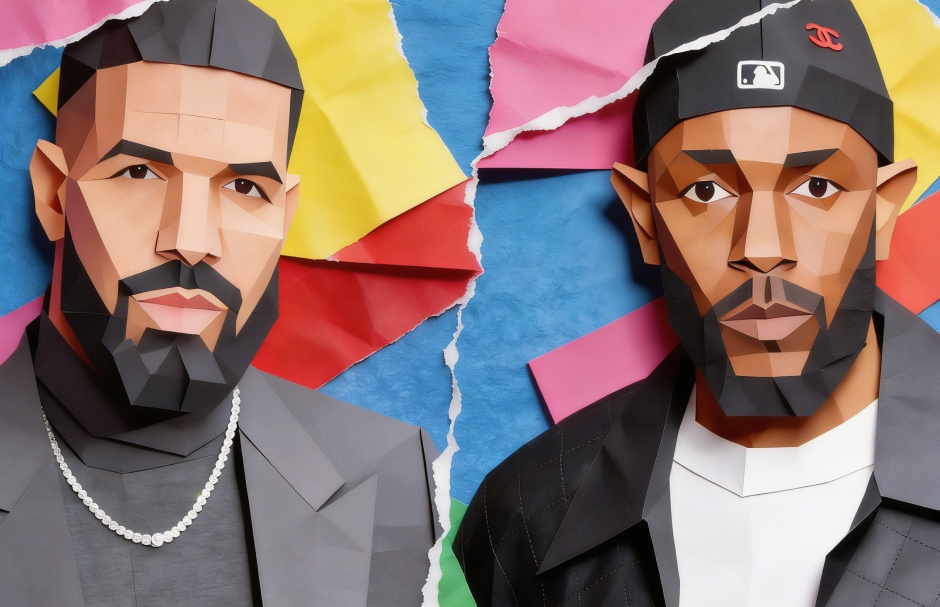
Drake’s defamation case against UMG just got harder to win.Two amicus briefs filed Friday (April 3) in the U.S. Court of Appeals for the Second Circuit have come down firmly on UMG’s side, urging the appeals court to uphold the October 2025 dismissal of Drake’s lawsuit over Kendrick Lamar’s “Not Like Us.” Judge Jeannette Vargas originally ruled that the diss track “constitutes protected opinion rather than actionable defamation.” Drake appealed in January 2026, and UMG filed its 83-page response brief in late March, calling Drake’s arguments “astoundingly hypocritical” and “nonsensical.” Now, outside legal experts are piling on.

The first brief came from the Floyd Abrams Institute for Freedom of Expression at Yale Law School, joined by Professor Lyrissa Lidsky, one of the country’s leading defamation scholars and a co-reporter for the in-progress Restatement (Third) of Torts: Defamation and Privacy. Their argument centers on a theory that hasn’t been central to the case until now: consent.

The brief opens with a pointed analogy. A boxer who challenges the world champion, gets knocked out on live television, and then sues for battery would lose immediately, because he consented to the fight. “Defamation is also an intentional tort, and defamation claims are likewise foreclosed by consent,” the filing states. Under New York law, the brief argues, consent to defamation is an absolute defense, whether expressly given or implied by circumstances.

The Institute’s central claim is that Drake didn’t just participate in a rap battle, he specifically invited the statements he now claims are defamatory. In his Taylor Made Freestyle, released April 19, 2024, Drake used an AI-generated Tupac voice to encourage Lamar to “talk about him likin’ young girls.” Lamar responded days later with “Not Like Us” on May 4, 2024. Drake then acknowledged the response in The Heart Part 6 the following day, referencing the “Epstein angle” as something he expected. “It is difficult to imagine a clearer call-and-response,” the brief states.

Drake’s lawsuit frames itself as being about UMG’s promotional decisions, not Lamar’s lyrics directly, a framing the Floyd Abrams brief explicitly rejects. By inviting the diss track and anticipating its scale of dissemination, the brief argues, Drake cannot now escape a consent defense simply by suing the label instead of the artist.

The second brief, filed on behalf of social scientists and legal scholars from Howard University, the University of Richmond, Virginia Polytechnic Institute, Tulane University, and the UCI Intellectual Property, Arts, and Technology Clinic at UC Irvine School of Law, takes a different angle. Their argument: treating rap lyrics as factual statements isn’t just legally wrong, it’s dangerous.

Related Stories

“Drake’s defamation claim rests on the assumption that every word of ‘Not Like Us’ should be taken literally, as a factual representation,” the brief states. “This assumption is not just faulty, it is dangerous.” The scholars argue that diss tracks are a long-standing feature of rap culture, understood by audiences as hyperbole, wordplay, and competitive dominance, not factual reporting. They also cite three decades of empirical research showing that violent lyrics labeled as rap are, on average, interpreted as more literal and more threatening than identical lyrics presented as another genre, a pattern the scholars argue introduces racial bias into judicial proceedings.

The most pointed moment in the second brief involves Drake’s own public record. He previously endorsed a “Protect Black Art” campaign opposing the use of rap lyrics as literal evidence in court. “Though Drake has previously acknowledged this danger publicly, he now paradoxically and problematically embraces it,” the brief states.

As Music Business Worldwide reported, the broader stakes of this case extend well beyond the feud itself. “Not Like Us” won Grammy Awards for Record and Song of the Year and was performed at the 2025 Super Bowl halftime show before an audience of over 133 million viewers. If the Second Circuit reverses the dismissal, it could open the door to defamation liability for labels, marketers, and distributors tied to diss track releases, a precedent that would have sweeping implications for how the Drake and Kendrick feud and similar rap battles are handled commercially going forward. Drake’s reply brief is due April 17.

Related Stories

It seems we can’t find what you’re looking for.

Related Stories

It seems we can’t find what you’re looking for.

Related Stories

It seems we can’t find what you’re looking for.

Related Stories

It seems we can’t find what you’re looking for.

FTM Newsletter

Sign Up for the Weekly Flare Newsletter so they news comes to you!

Trending

Weekly flare

A weekly briefing on what matters in the music industry

By providing your information, you agree to our Terms of Service and our Privacy Policy. We use vendors that may also process your information to help provide our services

You Might Also Like

Get the Today in Entertainment Newsletter

A weekly brief about what matters and what's interesting in Music

By providing your information, you agree to our Terms of Service and our Privacy Policy. We use vendors that may also process your information to help provide our services.