
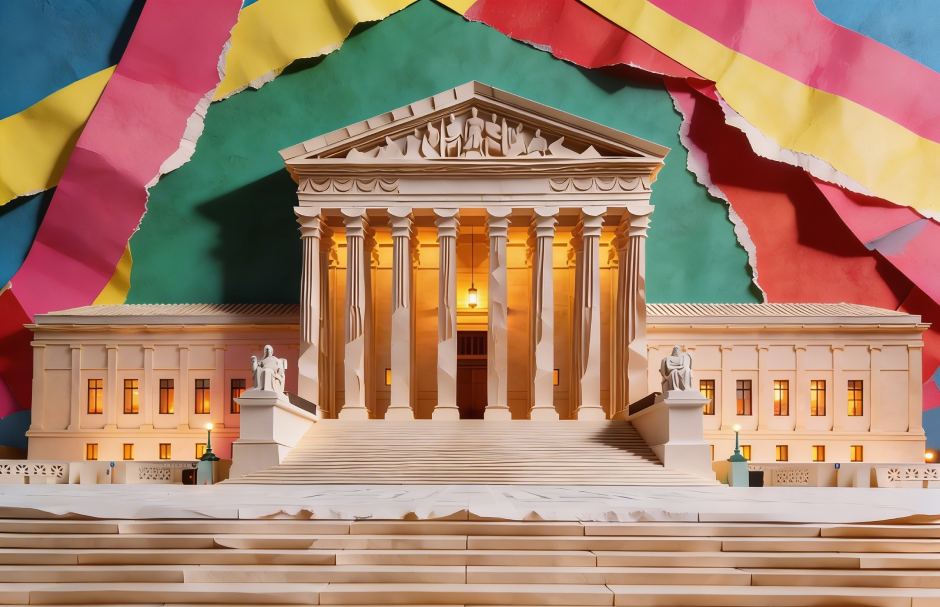
The Supreme Court has ruled in favor of Cox Communications, overturning a billion-dollar piracy case brought by Universal Music Group, Sony Music Entertainment, and Warner Music Group, and drawing a clear line around how far copyright liability can extend.
The case centered on whether an internet service provider can be held responsible for the actions of its users when those users engage in copyright infringement. The labels argued that Cox had received extensive notices about piracy happening across its network and failed to take sufficient action, which led to a 2019 jury verdict holding the company liable for over 10,000 infringed songs and awarding damages that totaled roughly $1 billion.
In its decision, the Court rejected that framework and clarified that providing access to the internet is not the same as participating in infringement. Justice Clarence Thomas wrote that liability requires intent, not just awareness, emphasizing that a company cannot be treated as a copyright infringer simply because it knows some users may misuse its service. The Court pointed to the broader role of internet infrastructure, noting that the same networks enabling illegal activity are overwhelmingly used for lawful purposes.
Cox had consistently argued that expanding liability in this way would force internet providers into an enforcement role that they are not designed to handle, effectively requiring them to terminate users at scale to avoid legal risk. The Court’s ruling aligns with that concern, reinforcing that ISPs are not expected to function as copyright police and cannot be penalized solely for failing to eliminate all instances of infringement on their networks.
For the music industry, the ruling represents a setback in efforts to extend accountability beyond platforms that host or distribute content and into the infrastructure layer itself. The Recording Industry Association of America expressed disappointment, arguing that the evidence showed Cox enabled large-scale infringement and that stronger protections are needed to safeguard creators and their revenue streams.
At the same time, the decision does not eliminate all forms of liability. The Court made clear that companies can still be held responsible if they actively encourage or facilitate infringement, maintaining a distinction that has shaped prior rulings involving technologies like file-sharing services. What it removes is the ability to rely on knowledge alone as the basis for liability when a service has substantial lawful uses.
There was also some internal disagreement among the justices about how far this protection should extend. While concurring in the outcome, Justice Sonia Sotomayor warned that the majority’s reasoning could weaken existing expectations around how providers respond to illegal activity, potentially allowing companies to step back from enforcement efforts without consequence.
The ruling ultimately reinforces a structural boundary that has long existed in the digital ecosystem. As music consumption, distribution, and piracy continue to evolve alongside new technologies, the question of responsibility remains central, but this decision makes clear that the burden cannot be placed on access providers alone.