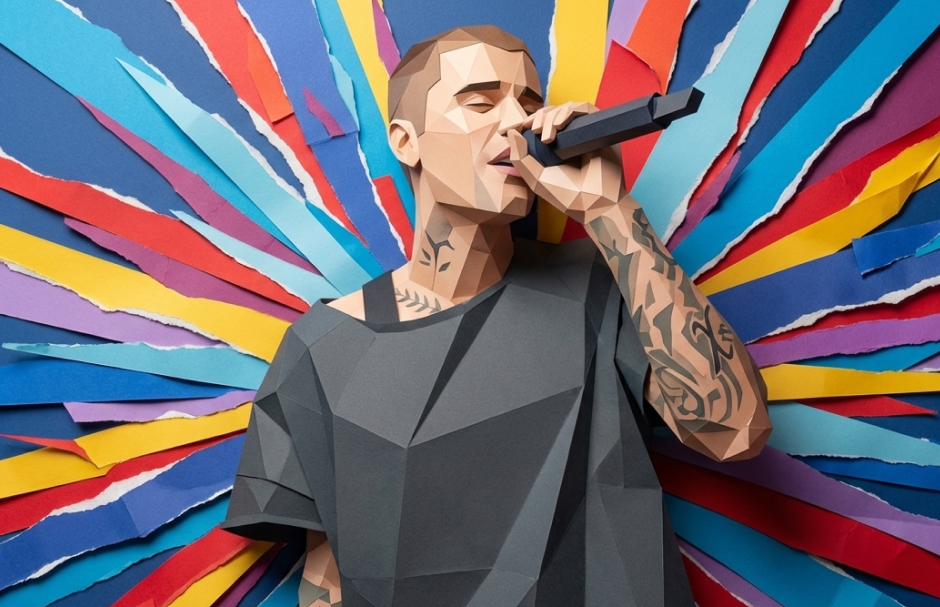
The rumor spread fast, but the facts are simpler. After Justin Bieber headlined Coachella on Saturday (April 11) with a set that spent most of its first 50 minutes on new material from his 2025 albums SWAG and SWAG II, a theory circulated online and in tabloid coverage suggesting the real reason he played YouTube videos of older hits rather than singing them live in full was legal: that his 2023 catalog sale had stripped him of the right to perform his own songs. That theory is wrong, and the people who know the deal best are saying so directly.
“That’s nonsense,” a source familiar with the terms of Bieber’s catalog deal told Billboard. “There are no restrictions on what he can or can’t do in live performance.” The source noted that Bieber performed around a dozen of the songs included in the 2023 transaction at Coachella, and that Brooklyn rock band Geese performed their own cover of “Baby” at the same festival hours before Bieber took the stage, a point that underlines exactly why the theory doesn’t hold up legally.
Under US copyright law, performing a song in concert requires only a public performance license, and venues secure blanket licenses from organizations like ASCAP and BMI that automatically cover the performance of nearly all popular songs. This is true whether the performer is the original artist, a cover band, or a completely unrelated act. Bieber’s sale of his publishing rights and artist royalties to Hipgnosis Songs Capital, now called Recognition Music Rights, transferred financial interests in those recordings and compositions. It did not create a performance prohibition of any kind.
The misunderstanding stems from a common and persistent confusion about what music rights actually are and what changes hands in a catalog sale. In 2023, Bieber sold 100% of his publishing rights and his artist royalties from his master recordings and neighboring rights to 290 songs released before December 31, 2021, from “Baby” through Justice. That sale, valued at just over $200 million, gave Recognition Music Rights the right to collect royalties from those works, not the authority to determine whether Bieber performs them on stage.
This is the same misreading that fueled years of speculation about Taylor Swift and the Super Bowl. When Scooter Braun’s Ithaca Holdings purchased Big Machine Records and acquired Swift’s original masters, fans theorized she was declining Super Bowl invitations to avoid spiking streams that would benefit Braun financially. That theory similarly misread what a masters sale actually controls. Swift always owned her song publishing, the same category Bieber sold, and her decision not to perform at the Super Bowl had nothing legally to do with her masters situation.
As Billboard noted, Bieber performed about a dozen catalog songs during the roughly 25 minutes of his set devoted to older material, playing their YouTube videos while singing snippets, a choice that may have reflected artistic intent more than legal constraint. The source suggested those tracks “felt out of place in the set,” framing the brief treatment as a pacing decision rather than a rights workaround, which is a meaningful distinction worth making clearly.
The broader issue is that catalog sales have become common enough in the modern music industry that public understanding of what they actually entail still lags significantly behind their frequency. As more major artists sell publishing rights, master royalties, or both to investment vehicles and music rights companies, misinformation about what those deals restrict will continue to circulate. The Bieber Coachella story is a useful case study in why that gap matters: selling your financial interest in a song is not the same as surrendering the right to sing it.