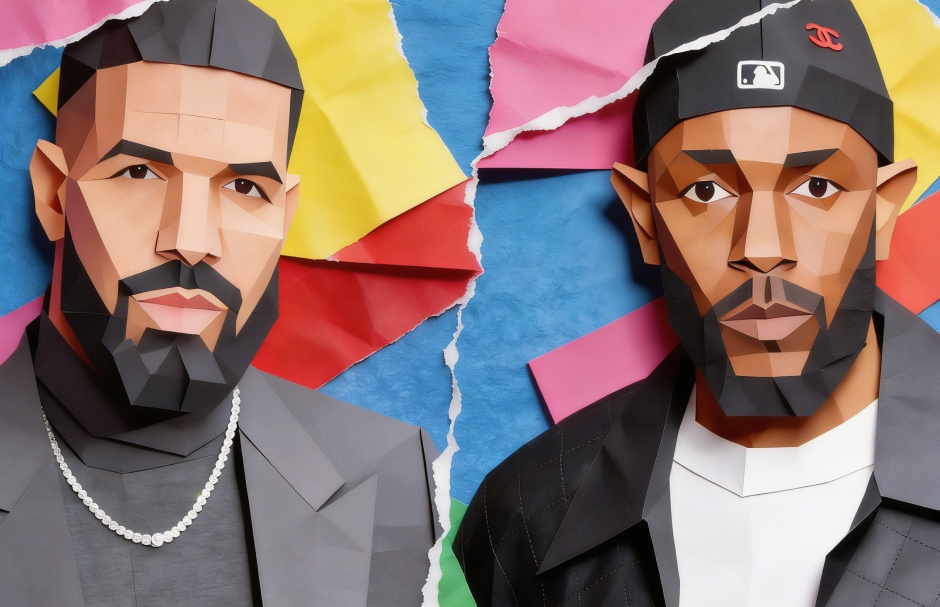
Drake’s defamation case against UMG just got harder to win.Two amicus briefs filed Friday (April 3) in the U.S. Court of Appeals for the Second Circuit have come down firmly on UMG’s side, urging the appeals court to uphold the October 2025 dismissal of Drake’s lawsuit over Kendrick Lamar’s “Not Like Us.” Judge Jeannette Vargas originally ruled that the diss track “constitutes protected opinion rather than actionable defamation.” Drake appealed in January 2026, and UMG filed its 83-page response brief in late March, calling Drake’s arguments “astoundingly hypocritical” and “nonsensical.” Now, outside legal experts are piling on.
The first brief came from the Floyd Abrams Institute for Freedom of Expression at Yale Law School, joined by Professor Lyrissa Lidsky, one of the country’s leading defamation scholars and a co-reporter for the in-progress Restatement (Third) of Torts: Defamation and Privacy. Their argument centers on a theory that hasn’t been central to the case until now: consent.
The brief opens with a pointed analogy. A boxer who challenges the world champion, gets knocked out on live television, and then sues for battery would lose immediately, because he consented to the fight. “Defamation is also an intentional tort, and defamation claims are likewise foreclosed by consent,” the filing states. Under New York law, the brief argues, consent to defamation is an absolute defense, whether expressly given or implied by circumstances.
The Institute’s central claim is that Drake didn’t just participate in a rap battle, he specifically invited the statements he now claims are defamatory. In his Taylor Made Freestyle, released April 19, 2024, Drake used an AI-generated Tupac voice to encourage Lamar to “talk about him likin’ young girls.” Lamar responded days later with “Not Like Us” on May 4, 2024. Drake then acknowledged the response in The Heart Part 6 the following day, referencing the “Epstein angle” as something he expected. “It is difficult to imagine a clearer call-and-response,” the brief states.
Drake’s lawsuit frames itself as being about UMG’s promotional decisions, not Lamar’s lyrics directly, a framing the Floyd Abrams brief explicitly rejects. By inviting the diss track and anticipating its scale of dissemination, the brief argues, Drake cannot now escape a consent defense simply by suing the label instead of the artist.
The second brief, filed on behalf of social scientists and legal scholars from Howard University, the University of Richmond, Virginia Polytechnic Institute, Tulane University, and the UCI Intellectual Property, Arts, and Technology Clinic at UC Irvine School of Law, takes a different angle. Their argument: treating rap lyrics as factual statements isn’t just legally wrong, it’s dangerous.