From the Grateful Dead to Vegas Residencies: How Live Music Is Surviving Its Biggest Crisis
Summer concerts are one of the most popular ways to spend a breezy evening in June or July. In today’s strained economy, touring has become so prohibitively expensive that only the most popular artists can afford to hit the road and profit.
Interestingly, over the last fifty years, the most-touring artists haven’t always been the most famous. They’ve been the most dedicated: bands willing to sleep on floors, eat pizza for weeks, and travel overnight on a bus. Some of the most-touring acts in history include Cheap Trick (4,100 concerts over 51 years), Alice Cooper (2,300 concerts only counting US over 50 years), ZZ Top (3,175 over 50 years), and the Grateful Dead (2,300 over 30 years).
From the early touring era, the Grateful Dead stand as the ultimate example of sustaining an endless touring cycle. At the height of their career, the Grateful Dead thrived with the road as their home. In 1993 alone, the Dead grossed $45.6 million from 81 concerts, according to Pollstar, a staggering figure for the time equivalent to roughly $95 million today. Their relentless schedule cultivated an unprecedented culture of fandom and loyalty. Deadheads clad in tie-dye followed the band from city to city, camping out in parking lots and catching shows night after night throughout the summer and fall. The Dead, as their fans affectionately called them, thrived on this model.
As Bob Weir told High Times in 1990: “We’re not in the business of selling records. We’re in the business of creating moments. And you can’t create those moments in a studio. You have to be there, with the people, in the room, when it happens.”
The goal of the Dead’s touring journey was not about making money; it was about creating community, having fun, and promoting creativity. Yet even with community at the forefront, by the mid-1990s, the Dead were making bank through the sheer volume of ticket sales, merchandise, tape and CD trading. The Grateful Dead purposely kept ticket prices low so anyone could afford to attend. It was like the ‘$1 pizza slice’ model: keep the unit price low, and allow the volume of people moving through your concert to drive the profit.
Today there are surprisingly few ways for most artists to earn life-building money without touring, especially when the artist is busy creating music. Hiring promotion staff eats into thin margins, so it takes a business-minded artist to realize the only sustainable path on the road is a tiny crew and constant cost-cutting. The glamor and glitz of five-star tours are a thing of the past; now, touring is a lonely, expensive grind.
The Grateful Dead’s relentless touring and success created an industry-wide expectation that all artists must tour constantly to survive, especially in the pre-internet era when live shows were one of the few ways to reach fans. The upside? Fans could see their favorite band every summer. But at what cost to the artist?
Radio and streaming still matter, but for most artists they’re just one lane of income, and sync licensing isn’t something you just tap into. It takes the right relationships, the right records, and enough visibility to even get in the room. With music industry revenue topping $30 billion globally, the numbers look impressive from the outside, but the reality for mid-level acts tells a different story. As Music 3.0 reported, overall touring revenue is higher than ever, but only the top 1% of artists is capturing most of it, with everyone else at the bottom of the pyramid missing out. When the musician’s time is taken up with promoting old work, artists may not have the energy or creative inspiration to write new music. Especially mid-level acts and foreign entertainers are saying no. For them, the financial return is too small.
Dry Cleaning’s drummer Nick Buxton told Rolling Stone’s Simon Vozick-Levinson in January 2026 that while the demand exists, the costs have become prohibitive.
“There is demand and there is supply, and the revenue from doing a big tour is significant. It’s a lot of money,” Buxton said. “It’s just the flights, the tour buses, the hotels, even the food, are just exploding at the moment and making it unrealistic.”
Related Stories
Performers want to be in front of audiences, share new music, test ideas, and sing the old favorites. But only mega-show artists clear real profit. After insurance, venue cuts, travel, taxes, and crew pay, most tours leave nothing to subsidize the actual music. According to AMW Group’s 2026 live music statistics, artists typically receive only 10 to 20 percent of gross ticket revenue after venue, promoter, and agent fees. In an era of huge productions, superstars with big touring machines have the potential to earn millions.
Another piece of the puzzle is the infrastructure itself. The pandemic forced a reset, not just for artists, but for the technical crews behind them. When touring halted, many sound engineers, lighting designers, and electricians moved to stable jobs, leaving a smaller, concentrated, and now more expensive talent pool for returning tours, as Vozick-Levinson reported in Rolling Stone in January 2026. In response, artists have adopted new ways of connecting with their fans: residencies and social media.
Residencies let mega-successful artists “get on the road” without living the touring life. The concept isn’t new. Vegas has long hosted foundational acts like Wayne Newton, Donny and Marie, Barry Manilow, and Elvis. But today’s artists are taking more control over the terms. They like it because their entire crew can support the “tour,” make music and money, all while staying in one place for weeks at a time with their families. Residencies allow performers, along with their musicians, staff, and loved ones, to stay put while fans flock to them. Shows can be intricately detailed because crews don’t have to deconstruct and rebuild the production nightly. The run can last several nights, weeks, or years.
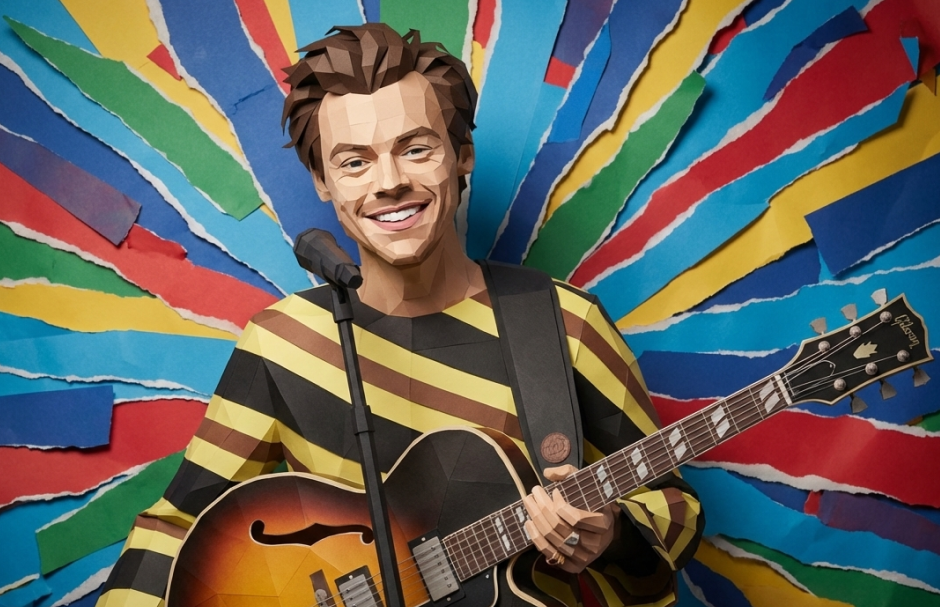
Usher, Adele, Bruno Mars, Def Leppard, Garth Brooks, Bette Midler, Cher, Elton John, Celine Dion, Harry Styles, Madonna, and LISA, who made history as the first K-pop act to headline a full Vegas residency, are among the megastars who have embraced the format, giving residencies a fresh reputation. No longer confined to the Las Vegas Strip, cities now compete to welcome stars and their traveling fans. After the pandemic, Harry Styles was among the first to prove that staying put could still move the world, completing a 42-date run with multiple nights in Los Angeles, New York, Austin, and Chicago.
Related Stories
Adele seems to be the pioneer of this revamped residency era. In 2022, she began her Las Vegas residency, Weekends with Adele. After 100 shows, the residency ran from March 2022 to November 2023 at the Colosseum at Caesars Palace. As Cliff Lipson of CBS reported, tickets sold out in about six hours, generating $50 million in ticket sales and earning roughly $2.2 million every time she took the stage. According to the Grammy’s coverage of the residency, the run set a new benchmark for what a modern Vegas residency could achieve.
Aside from residencies, artists are finding other fresh platforms that leave exhausting travel out of the equation. Tiny Desk concerts, TikTok clips, and Instagram engagement give millions of fans a peek at non-touring artists performing in smaller venues online. Audiences get a look into the creative process without requiring a full tour, a more affordable way to satisfy interest. As NPR’s Sacha Pfeiffer reported in November 2025, the production behind a single Tiny Desk performance is far more involved than it looks, but the reach it delivers makes it one of the most cost-effective promotional tools in music today.
When artists perform in cities where fans don’t live, it creates tourism opportunities for host communities. However, the cost of attending a residency show plus a weekend getaway is a greater financial commitment than seeing a small concert at a hometown bar. As a result, fans have cut back on the number of shows they attend each year, focusing their spending on one or two splurge events for special occasions.
The music business is in a constant ebb and flow of new ways to capture public attention. Compared to Beyoncé’s world tour, a platform like NPR’s Tiny Desk Concerts is modest and not immediately lucrative. The value isn’t the immediate payout; it’s the long tail of attention, as these performances continue to circulate and get replayed. Television and online appearances are recorded, archived, and endlessly retrievable. Top Tiny Desk performances are reposted across social media thousands of times, keeping the artist at the forefront of the public’s mind. Similarly, Saturday Night Live airs reruns and streams on platforms like Peacock. A single spot on these shows becomes an indelible form of long-term promotion.
The road isn’t disappearing. It’s evolving. The Grateful Dead proved that touring could build an empire, but their model demanded a toll few can pay today. As costs rise and crews shrink, artists are choosing sustainability over stamina. Whether through residencies, TV spots, or local showcases, the goal remains the same: connecting with fans without burning out. The music survives not by endless travel, but by adapting to the times. The show goes on, just from a different stage.
Related Stories
Related Stories
Related Stories
FTM Newsletter
Sign Up for the Weekly Flare Newsletter so they news comes to you!