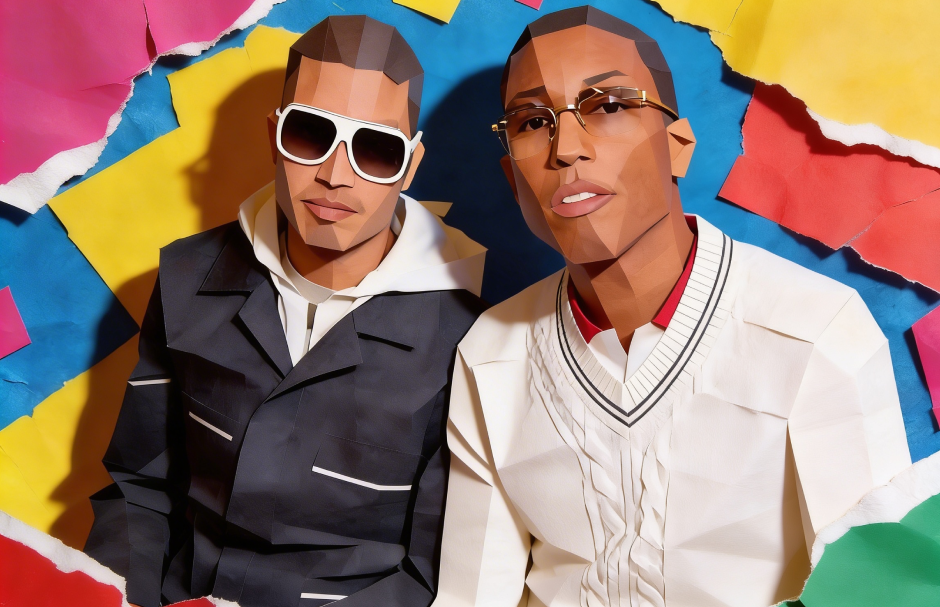
Chad Hugo’s legal dispute with Pharrell Williams is expanding, shifting from a royalty disagreement into a broader fight over authorship, credit, and long-term ownership.
In an amended complaint filed in February, Hugo introduced new claims challenging songwriting and production credits on eight tracks tied to Williams and other artists, including ROSALÍA, Latto and Tyler, the Creator. The expansion signals that the dispute is no longer limited to past accounting issues but now extends into how recent work has been credited and structured.
The case originally began in January, when Hugo filed suit in federal court in California, alleging he was owed between $325,000 and $575,000 in unpaid royalties, with potential damages reaching up to $1 million tied to projects including No One Ever Really Dies. At that stage, the focus was largely on transparency. Hugo claimed that he had been requesting financial records and royalty documentation since 2021 and had not been given access to the information needed to verify what he was owed.
The amended filing reframes the dispute in more fundamental terms. Rather than centering only on unpaid income, Hugo’s legal team argues that he was excluded from proper credit on music he helped create. The complaint positions his role within The Neptunes as central to the duo’s sound, describing him as responsible for composition, arrangement, instrumentation, and overall production design, while Williams operated more prominently as the public-facing figure.
This distinction carries weight because it directly impacts ownership. Hugo’s claim is built on the idea that his contributions were made with the expectation of joint authorship, meaning both parties intended for their work to be merged into unified compositions and recordings. From that perspective, the absence of credit is not just a financial issue but a removal from ownership itself, which would affect his stake in publishing and recording rights tied to those songs.
The legal argument, however, faces potential challenges. Many of the songs referenced in the amended complaint were released in 2022, raising questions about the statute of limitations under U.S. copyright law, which typically requires ownership disputes to be filed within three years. If that window is deemed to have passed, portions of the claim could be dismissed on procedural grounds.
At the same time, the inclusion of copyright claims appears to serve a strategic purpose beyond the substance of the case. By introducing federal copyright issues, Hugo’s legal team is able to keep the dispute in federal court. Without those claims, the case would likely fall under state law and be moved to a different jurisdiction, which could alter how the case is argued and resolved.
This is not the first legal conflict between the two longtime collaborators. In 2024, Hugo filed a separate lawsuit accusing Williams of attempting to control The Neptunes trademark, adding another layer to what has become a broader breakdown in one of the most influential production partnerships in modern music.
The business surrounding The Neptunes has also faced scrutiny in the past. In 2020, Kelis publicly claimed she had been misled about royalties tied to her debut album Kaleidoscope, which was produced by the duo, contributing to ongoing conversations about transparency and fairness in producer-driven deals.
Taken together, the situation reflects a pattern that appears frequently across the music industry. Creative partnerships are often built informally, with roles and expectations understood rather than explicitly documented. As the value of the work increases over time, those informal arrangements are tested, and questions around credit, ownership, and control become more difficult to resolve without legal intervention.